In the wake of the nationwide recall of eggs for contamination with salmonella, many consumers may be wondering what types of eggs are healthiest and safest to buy?
More than 90 percent of U.S. eggs come from caged hens. These birds have a space smaller than the size of a sheet of paper to move around, and live in filthy conditions. Aside from animal welfare concerns, that's bad for our health, too, Pennsylvania State University shows, because researchers recently found eggs raised on pasture are much more nutritious than eggs from their caged counterparts.
6 things food industry execs aren't telling you
Penn State's study, published recently in the journal Renewable Agriculture and Food Systems found that pastured hens—ones kept outside on different pastures where they can exhibit natural behavior and forage for bugs and grasses—boasted higher vitamin and omega-3 fatty acid levels when compared to their commercially fed, battery-cage-kept counterparts. Eggs from pastured hens contained twice as much vitamin E and 2.5 times more total omega-3 fatty acids as the eggs from caged birds contained.
12 reasons to buy only organic
What it means
There are dozens of claims that manufacturers can make on egg cartons. Some of them are meaningful, but others are just ways to trick consumers into thinking they're buying eggs from happy chickens. (Remember, 90 percent of chicken eggs produced in this country come from the worst type of production system—battery cages.)
10 Signs You're More Stressed Than You Think
The Anti-Cancer Diet
Beware These "Health" Foods That Really Aren't
9 Yoga Moves For Better Sex
..In an ideal situation, you would purchase your eggs from a local farmer in your area who raises chickens on pasture with plenty of space per bird, and uses moveable, open-air chicken houses, sometimes called chicken tractors, to protect the birds from predators. (You can look for this type of farmer on LocalHarvest.org.) Of course, you could also raise backyard chickens, if you have what it takes.
Eliminating cruel chicken cages is a matter of human health as well as animal welfare. The farther you take chickens away from their natural behaviors, the worse the quality of their eggs or meat.
"When you put four or five chickens in tiny cages, they can't engage in normal chicken behavior—pecking in the dirt, dusting. If they're in a cage, they can't do any of these things," explains chicken expert Gail Damerow, author of the classic Storey's Guide to Raising Chickens (Storey, 2010). (She hasn't purchased a store-bought egg since 1982.) "The pressure of the wire cages against their feet causes infections, their feathers rub off on the side of the cages. Basically, they're just totally frustrated. They've got nothing to do. They can't run around and eat flies and take dust baths. They just sit and lay eggs—what kind of life is that?" One result of all that stress and cruelty is that confined birds' eggs contain less nutrition than eggs from hens with room to roam.
Why organic eggs are worth the cost
What the labels on the egg carton really mean:
• "Cage-Free" "Cage-free is certainly not like Old McDonald's farm," explains Paul Shapiro, spokesperson for the Humane Society of the United States. But it's a lot better than battery cages, where most eggs are produced. "Cage-free" means that animals are not kept in cages, but generally they are kept inside in an enclosed building. While this is less than ideal, at least this setup gives animals a chance to spread their wings and lay eggs in nest boxes, which is closer to their natural behavior. Cage-free does not imply antibiotics were not used on hens.
• "Free-Range" or "Free-Roaming" Usually these types of operations allow chickens outside of cages in barns or warehouses, but they aren't required to provide the animals any specific amount of time outside—or even exposure to sunlight indoors. There's no third-party inspection required for free-range claims, and the chickens can be debeaked or forced into molting through starvation, according to the Humane Society of the United States.
More on the egg recall Reuters Do you have any bad eggs?
A list of egg brands affected in massive recall.
Egg recall drives worried customers to farmers markets
FDA: Bad egg inspection focuses on pullets
Farms recalling eggs share suppliers
..• "Organic" A USDA-certified organic label means the eggs came from hens that were not enclosed in battery cages, and that must be offered access to the outdoors. However, this doesn't guarantee that the animals ever go outside. Organic eggs come from hens that were fed certified-organic feed, free of antibiotics, pesticides, and other animal products. Forced molting and debeaking are permitted in certified-organic production. Annual inspections are required.
• "Natural" This means that the finished product hasn't undergone certain unnatural processes; in this case, that product is the egg. However, just because eggs are labeled natural doesn't mean a hen wasn't pumped up with antibiotics or other unnatural substances. And it certainly doesn't mean the chickens were raised in clean, humane conditions. For all intents and purposes, natural means nothing.
• "Pastured" Pastured chickens should be housed on grassland in portable shelters that are periodically moved to give the chickens fresh pasture, but there's no third-party inspection required to ensure that's what's really happening. Your best bet is to buy eggs from pastured hens at a local farm that raises the hens organically, ensuring they're not exposed to pesticides, animal by-products, or antibiotics.
• "Omega-3-Enriched" This means hens were fed feed with an increased amount of omega-3-rich flaxseeds. However, pasture-raised hens are already higher in beneficial omega-3s, and they get to be outside. Technically, caged hens could also be fed flax feed, so don't equate this label with better living standards.
• "Certified Humane" This means birds are not kept in cages, but they can be kept indoors. They at least have the space to perform natural behaviors. The program of Human Farm Animal Care sets limits on the number of birds that can be contained in the same area, and outside inspectors perform audits. The program does not, however, require that the animals eat organic feed.
• "United Egg Producers Certified" Shapiro says this, along with "natural," is one of the most misleading claims made on an egg carton. While forced molting is prohibited under this certification, debeaking is allowed, along with other cruel and inhumane practices, such as the use of battery cages.
Tuesday, August 24, 2010

Huge meat recall!
Another reason to support your local farmers!
Zemco Industries in Buffalo, New York, has recalled approximately 380,000 pounds of deli meat that may be contaminated with bacteria that can cause a potentially fatal disease, the U.S. Department of Agriculture announced Monday. The products were distributed to Wal-Marts nationwide, according to the USDA's website. The meats may be contaminated with Listeria monocytogenes, which was discovered in a retail sample collected by inspectors in Georgia. The USDA has received no reports of illnesses associated with the meats.
"Consumption of food contaminated with Listeria monocytogenes can cause listeriosis, an uncommon but potentially fatal disease," according to the USDA. "Healthy people rarely contract listeriosis. However, listeriosis can cause high fever, severe headache, neck stiffness and nausea.
"Listeriosis can also cause miscarriages and stillbirths, as well as serious and sometimes fatal infections in those with weakened immune systems, such as infants, the elderly and persons with HIV infection or undergoing chemotherapy," the USDA said.
Wal-Mart did not immediately respond to a request for comment Tuesday from CNN.
The products subject to recall are:
-- 25.5-pound cases of "Marketside Grab and Go Sandwiches BLACK FOREST HAM With Natural Juices Coated with Caramel Color" with the number 17800 1300.
-- 28.49-pound cases of "Marketside Grab and Go Sandwiches HOT HAM, HARD SALAMI, PEPPERONI, SANDWICH PEPPERS" with the number 17803 1300.
-- 32.67-pound cases of "Marketside Grab and Go Sandwiches VIRGINIA BRAND HAM With Natural Juices, MADE IN NEW YORK, FULLY COOKED BACON, SANDWICH PICKLES, SANDWICH PEPPERS" with the number 17804 1300.
-- 25.5-pound cases of "Marketside Grab and Go Sandwiches ANGUS ROAST BEEF Coated with Caramel Color" with the number 17805 1300.
The meats were produced on dates ranging from June 18 to July 2, 2010. The "Use By" dates range from August 20 to September 10, 2010.
Zemco Industries in Buffalo, New York, has recalled approximately 380,000 pounds of deli meat that may be contaminated with bacteria that can cause a potentially fatal disease, the U.S. Department of Agriculture announced Monday. The products were distributed to Wal-Marts nationwide, according to the USDA's website. The meats may be contaminated with Listeria monocytogenes, which was discovered in a retail sample collected by inspectors in Georgia. The USDA has received no reports of illnesses associated with the meats.
"Consumption of food contaminated with Listeria monocytogenes can cause listeriosis, an uncommon but potentially fatal disease," according to the USDA. "Healthy people rarely contract listeriosis. However, listeriosis can cause high fever, severe headache, neck stiffness and nausea.
"Listeriosis can also cause miscarriages and stillbirths, as well as serious and sometimes fatal infections in those with weakened immune systems, such as infants, the elderly and persons with HIV infection or undergoing chemotherapy," the USDA said.
Wal-Mart did not immediately respond to a request for comment Tuesday from CNN.
The products subject to recall are:
-- 25.5-pound cases of "Marketside Grab and Go Sandwiches BLACK FOREST HAM With Natural Juices Coated with Caramel Color" with the number 17800 1300.
-- 28.49-pound cases of "Marketside Grab and Go Sandwiches HOT HAM, HARD SALAMI, PEPPERONI, SANDWICH PEPPERS" with the number 17803 1300.
-- 32.67-pound cases of "Marketside Grab and Go Sandwiches VIRGINIA BRAND HAM With Natural Juices, MADE IN NEW YORK, FULLY COOKED BACON, SANDWICH PICKLES, SANDWICH PEPPERS" with the number 17804 1300.
-- 25.5-pound cases of "Marketside Grab and Go Sandwiches ANGUS ROAST BEEF Coated with Caramel Color" with the number 17805 1300.
The meats were produced on dates ranging from June 18 to July 2, 2010. The "Use By" dates range from August 20 to September 10, 2010.
Wednesday, August 18, 2010
Egg recall!
32 million dozens of eggs have been recalled due to salmonella poisoning. Another good reason to support your local farmers and buy your eggs from them!
Tuesday, August 10, 2010
Canning 101!
Another very heathy, cheap way to make food is canning. This was my very first attempt at canning so I went over to my mother in law's who has been canning for years. It was a lot of fun actually and the food turned out edible so I was very happy. Here is how my first attempt went:
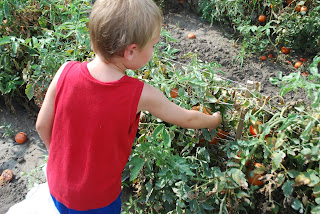
First we headed out to a local farm to pick some tomatoes. This is a great way for your kids to get involved as well.
Then we headed on over to MeMaw's house to cook up some yummy food!
Another great spot for the kids to help out is with cleaning the veggies (I think its the only thing I can get them to clean).

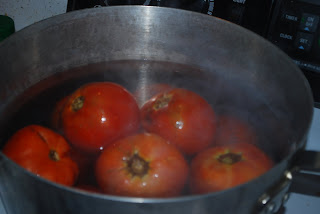
After cleaning the tomatoes, we cooked them in some hot water.
After cooking the tomatoes, peeling them, and slicing them we then added in all the other ingredients to make some yummy salsa (which my husband eats like crazy).

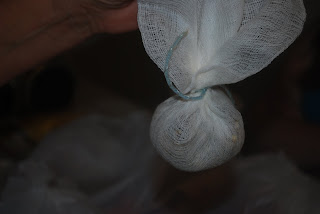
After getting it to a boil it was time to add in the spices.
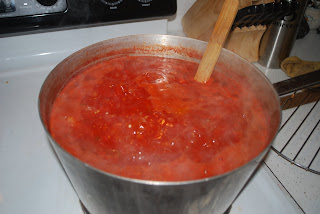
We then cooked the salsa for awhile until it got to the right consistency we wanted.
The last thing to do was add the salsa to the canning jars and put them into boiling water to make the seal.
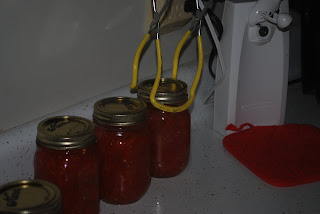
When we finished this is what we had!
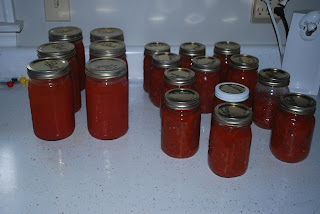
I spent just a little over $20 and ended up with 11 1/2 jars of salsa and 6 pints of tomato juice! Just that amount of salsa alone is worth well over $20! I was very happy with my first canning experience and even enjoyed it. I'm very excited on canning many more fruits and veggies over the next few weeks! And the best part of canning is that once you have all the supplies and can grow a decent garden, you can store a lot of food for a very small amount (which has become our goal for next year). Hope you are able to give it a try and can enjoy as much as I have!
First we headed out to a local farm to pick some tomatoes. This is a great way for your kids to get involved as well.

Then we headed on over to MeMaw's house to cook up some yummy food!
Another great spot for the kids to help out is with cleaning the veggies (I think its the only thing I can get them to clean).

After cleaning the tomatoes, we cooked them in some hot water.

After cooking the tomatoes, peeling them, and slicing them we then added in all the other ingredients to make some yummy salsa (which my husband eats like crazy).

After getting it to a boil it was time to add in the spices.

We then cooked the salsa for awhile until it got to the right consistency we wanted.

The last thing to do was add the salsa to the canning jars and put them into boiling water to make the seal.

When we finished this is what we had!

I spent just a little over $20 and ended up with 11 1/2 jars of salsa and 6 pints of tomato juice! Just that amount of salsa alone is worth well over $20! I was very happy with my first canning experience and even enjoyed it. I'm very excited on canning many more fruits and veggies over the next few weeks! And the best part of canning is that once you have all the supplies and can grow a decent garden, you can store a lot of food for a very small amount (which has become our goal for next year). Hope you are able to give it a try and can enjoy as much as I have!
Monday, August 2, 2010
Saving money on fresh fruit and veggies!
Right now is the best time to be stocking up on all your fresh fruits and veggies while the price is right, but what do you do with them after you buy them since you obviously won't eat it all in one week. Well I spent about about $22 yesterday and came home with several grocery bags of fresh produce. After I got home I spent a couple of hours getting a lot of my veggies and fruit ready to freeze. Here is a website that will help you freeze most of your veggies: http://www.gardenguides.com/416-freezing-vegetables.html. It is so easy to do and it even tells you how long it will keep! I'm also going to start learning canning from my wonderful mother in law who has been doing it for years. With our garden in its prime, we are starting to take in more food than we can eat so I'm giving it to lots of family and friends but I really need to be getting it ready for the winter months. Why do I freeze and do canning? Right now food is cheap so why not stock up plus in the winter they buy the fresh fruit and veggies from across the world before it is ripe then use chemicals and gasses to ripen them......yuck! I want to keep everything as natural as I can for my family and this is the best way for us along with being very cost efficient! So I can't wait to adventure into canning and make lots more yummy food we can enjoy all winter long! Stay tuned for more!
Monday, July 19, 2010
Fruit salsa!
While in Branson this past week, I took a cooking class at Silver Dollar City about healthy snacks. One of the recipes was fruit salsa........hum, wasn't sure how I would like it. It turns out it is really good! And very easy to make!
Mix together the following ingredients
-one drained can of pineapples
-strawberries, kiwi, papaya, and mango sliced up
-diced up red onion
-about 5-6 dashes of soy sauce
-cut up cilantro
Mix everything together and serve. It was so good I've already made it twice! She suggested making it as a side to go with hawaiian chicken and rice and drizzle some of the juices over the rice.
You can also dice up the fruit into small pieces and eat it with chips.
Great summer time snack!
Mix together the following ingredients
-one drained can of pineapples
-strawberries, kiwi, papaya, and mango sliced up
-diced up red onion
-about 5-6 dashes of soy sauce
-cut up cilantro
Mix everything together and serve. It was so good I've already made it twice! She suggested making it as a side to go with hawaiian chicken and rice and drizzle some of the juices over the rice.
You can also dice up the fruit into small pieces and eat it with chips.
Great summer time snack!
Saturday, June 26, 2010
Saving money!
I just got done reading a great book called Saving Money Anyway You Can......Becoming a Frugal Family. This book was such a great read and although most of the things in there I already do, it did bring some new insight into a few things. For instance, to help save the environment along with saving lots of money is to always buy used. Go to garage sales, consignment shops, and best of all use freecycle. Most of this I already put into play and almost all of my kids clothes I buy used outside of the nice things that their grandparents will buy them. But this can go further than clothing, which is what I have never done. For instance we are really wanting to get new furniture someday......new leather furniture.......big ouch on our budget. I never really considered buying it used which is probably where it will eventually have to come from. Now all my kids furniture is used outside of our baby set which my parents bought us. Adriana's bedroom set came from my cousin's daughter. Andrew's bed is a Thomas the Train toddler bed which my mom bought him for his birthday off of Craigslist and his dresser is my sister's old baby dresser from her kids room. I think the hardest part of buying used would have to be a mattress. I'm not sure I can use someone else's used mattress.
It also had a lot of other good ideas on saving money but these had to do with being green and recycling all your old items and using recycled items. It is an older book so some things are really outdated but otherwise a good, easy read.
It also had a lot of other good ideas on saving money but these had to do with being green and recycling all your old items and using recycled items. It is an older book so some things are really outdated but otherwise a good, easy read.
Sunday, June 20, 2010
O'Fallon farmers market!
Yesterday my mom and I went to check out the O'Fallon farmers market and I fell in love! This is 100 times better than the St. Charles farmers market. I was able to pick up all kids of fresh veggies that had been used with no pesticides or fertilizers (but not called organic because it costs a lot of money to be called that by the gov.). Its great because you can talk to the farmers themselves and they will tell you anything you want to know about their farms. I was also able to pick up some bacon and hotdogs from another farmer. They have pictures of all their farm animals sitting out and welcome anyone to come out and have a tour of their farms. This made me feel at ease because its hard to be cruel to animals when you have an open door. Also, the hotdogs were the best I have ever had and they were made of all beef, not the ears, nose, tongue or whatever else they use. We haven't tried the bacon yet. I also picked up some homemade cinnamon rolls from an amish group. Yummy.....is all I can say. The kids gobbled them up so fast! Would definitely recommend and if you go, you will probably see me there since I think I will become a regular!
Saturday, June 5, 2010
Club sandwich kabobs!
The kids love these and the great thing is you can make it how you want to. We have to adjust it a little to my kids liking but its something fun they can help make.
Serves 4
This fun lunch is ideal for kids to help make since they can roll up the meat and cut ingredients with a table knife. Serve these with mustard, mayonnaise or ranch dressing on the side for dipping and be sure to break any sharp ends off of the skewers when serving these kabobs to small kiddos.
Ingredients
4 thick slices whole grain bread, toasted and cut into (1-inch) cubes
4 slices deli ham
4 slices deli turkey
16 cherry tomatoes
4 leaves butter or romaine lettuce
1/4 pound cheddar, cut into cubes
1/4 pound provolone or mozzarella, cut into cubes
2 kosher dill or sweet pickles, thickly sliced
Method
Alternating ingredients, thread bread, ham, turkey, tomatoes, lettuce, cheese and pickles onto skewers and serve.
Serves 4
This fun lunch is ideal for kids to help make since they can roll up the meat and cut ingredients with a table knife. Serve these with mustard, mayonnaise or ranch dressing on the side for dipping and be sure to break any sharp ends off of the skewers when serving these kabobs to small kiddos.
Ingredients
4 thick slices whole grain bread, toasted and cut into (1-inch) cubes
4 slices deli ham
4 slices deli turkey
16 cherry tomatoes
4 leaves butter or romaine lettuce
1/4 pound cheddar, cut into cubes
1/4 pound provolone or mozzarella, cut into cubes
2 kosher dill or sweet pickles, thickly sliced
Method
Alternating ingredients, thread bread, ham, turkey, tomatoes, lettuce, cheese and pickles onto skewers and serve.
Turkey and cucumber wraps!
I've made this several times. They are so yummy and a great summer time lunch!
Serves 1
Pack the ingredients separately in a lunch box to roll up at lunchtime or serve the dressing on the side to avoid having a soggy wrap at meal time. Instead of a tortilla, use a piece of lavash bread, if desired.
Ingredients
1 (8-inch) whole wheat tortilla
1 leaf green leaf lettuce
1 ounce thinly sliced smoked turkey
1 slice cheddar cheese
6 thin slices cucumber
4 cherry tomatoes, halved
1 to 2 tablespoons ranch or blue cheese dressing
Method
Arrange tortilla on a large plate. Top with lettuce, turkey, cheese, cucumbers and tomatoes, then drizzle with dressing. Roll up and serve.
Nutrition
Per serving (about 9oz/263g-wt.): 400 calories (210 from fat), 24g total fat, 8g saturated fat, 55mg cholesterol, 990mg sodium, 29g total carbohydrate (3g dietary fiber, 4g sugar), 21g protein
Serves 1
Pack the ingredients separately in a lunch box to roll up at lunchtime or serve the dressing on the side to avoid having a soggy wrap at meal time. Instead of a tortilla, use a piece of lavash bread, if desired.
Ingredients
1 (8-inch) whole wheat tortilla
1 leaf green leaf lettuce
1 ounce thinly sliced smoked turkey
1 slice cheddar cheese
6 thin slices cucumber
4 cherry tomatoes, halved
1 to 2 tablespoons ranch or blue cheese dressing
Method
Arrange tortilla on a large plate. Top with lettuce, turkey, cheese, cucumbers and tomatoes, then drizzle with dressing. Roll up and serve.
Nutrition
Per serving (about 9oz/263g-wt.): 400 calories (210 from fat), 24g total fat, 8g saturated fat, 55mg cholesterol, 990mg sodium, 29g total carbohydrate (3g dietary fiber, 4g sugar), 21g protein
Peach and mango popsicles!
These are sooooo yummy and the kids loved helping me make them!
Makes 6 to 8
It doesn’t matter if you’re 2 or 102, the sweet-tooth appeal of homemade fruit popsicles is universal.
Ingredients
1 cup puréed mango (from peeled fruit)
1 cup puréed ripe peaches (from peeled fruit)
1/4 cup water
2 tablespoons sugar
Lime or lemon juice to taste
6 to 8 popsicle sticks
Method
Combine fruit purées in a medium bowl. Heat water and sugar, stirring until sugar dissolves. Add to purées with lime or lemon juice to taste. If you have popsicle molds, fill them, leaving some room at the top to allow for expansion, set the lids in place and insert the sticks through the holes. If you don’t have popsicle molds, fill small cups or empty yogurt tubs about 3/4 full, stretch plastic or foil across the top and make a small slit to insert sticks. Freeze until firmly set, 3 to 4 hours. To remove the pops, first remove the lids or wrap, then squeeze the sides of the molds, twisting them slightly, to dislodge the pop. If necessary, rinse the outside of the molds under hot water first.
Nutrition
Per serving (1 popsicle/62g-wt.): 40 calories (0 from fat), 0g total fat, 0g saturated fat, 0mg cholesterol, 0mg sodium, 10g total carbohydrate (1g dietary fiber, 9g sugar), 0g protein
Makes 6 to 8
It doesn’t matter if you’re 2 or 102, the sweet-tooth appeal of homemade fruit popsicles is universal.
Ingredients
1 cup puréed mango (from peeled fruit)
1 cup puréed ripe peaches (from peeled fruit)
1/4 cup water
2 tablespoons sugar
Lime or lemon juice to taste
6 to 8 popsicle sticks
Method
Combine fruit purées in a medium bowl. Heat water and sugar, stirring until sugar dissolves. Add to purées with lime or lemon juice to taste. If you have popsicle molds, fill them, leaving some room at the top to allow for expansion, set the lids in place and insert the sticks through the holes. If you don’t have popsicle molds, fill small cups or empty yogurt tubs about 3/4 full, stretch plastic or foil across the top and make a small slit to insert sticks. Freeze until firmly set, 3 to 4 hours. To remove the pops, first remove the lids or wrap, then squeeze the sides of the molds, twisting them slightly, to dislodge the pop. If necessary, rinse the outside of the molds under hot water first.
Nutrition
Per serving (1 popsicle/62g-wt.): 40 calories (0 from fat), 0g total fat, 0g saturated fat, 0mg cholesterol, 0mg sodium, 10g total carbohydrate (1g dietary fiber, 9g sugar), 0g protein
Wednesday, June 2, 2010
Animal cruelty!
This link will show why I will not support farmers like this! This made me so upset and mad! I couldn't even get past the first few seconds of the video so I don't even know what else is on it. Here is the post with the video. Help stop farmers like this!
http://www.change.org/petitions/view/shut_down_conklin_dairy_farms_and_arrest_and_charge_gary_conklin_and_his_crew_with_animal_cruelty
http://www.change.org/petitions/view/shut_down_conklin_dairy_farms_and_arrest_and_charge_gary_conklin_and_his_crew_with_animal_cruelty
Friday, May 28, 2010
Pecan crusted chicken!
This is a very, very good chicken meal! We are making it again this weekend! These do have a bit of a kick to it so beware when giving it to little kids.
Serves 4
A crispy coating of crushed pecans and cornflakes gives these lean, boneless chicken breasts a tasty oven ‘fried’ crunch.
Ingredients
1 1/2 cups buttermilk
2 teaspoons cayenne pepper
1 1/2 teaspoons salt, divided
1 tablespoon garlic powder (available in the spice aisle)
4 (6-8 ounces) boneless, skinless chicken breast cutlets
4 cups 365 Everyday Value™ Corn Flakes
1 cup whole pecans
Method
Position oven rack to middle shelf; preheat to 375ºF. Spray baking sheet with nonstick spray; set aside.
Whisk together buttermilk, cayenne pepper, 1 teaspoon of salt and garlic powder. Add chicken; marinate 10 minutes. While chicken is marinating, coarsely grind corn flakes and pecans, separately, in a food processor. Mix together in a large bowl; season with remaining salt. Lift a chicken breast out of buttermilk allowing excess to drain off into bowl; cover entire chicken breast in corn-flake mixture; transfer to baking sheet. Repeat with remaining chicken. Throw out any remaining buttermilk. Bake 20 minutes or until internal temperature reaches 170ºF on instant-read thermometer.
Nutrition
Per serving (about 8oz/235g-wt.): 530 calories (220 from fat), 25g total fat, 3.5g saturated fat, 110mg cholesterol, 1280mg sodium, 32g total carbohydrate (4g dietary fiber, 6g sugar), 46g protein
Serves 4
A crispy coating of crushed pecans and cornflakes gives these lean, boneless chicken breasts a tasty oven ‘fried’ crunch.
Ingredients
1 1/2 cups buttermilk
2 teaspoons cayenne pepper
1 1/2 teaspoons salt, divided
1 tablespoon garlic powder (available in the spice aisle)
4 (6-8 ounces) boneless, skinless chicken breast cutlets
4 cups 365 Everyday Value™ Corn Flakes
1 cup whole pecans
Method
Position oven rack to middle shelf; preheat to 375ºF. Spray baking sheet with nonstick spray; set aside.
Whisk together buttermilk, cayenne pepper, 1 teaspoon of salt and garlic powder. Add chicken; marinate 10 minutes. While chicken is marinating, coarsely grind corn flakes and pecans, separately, in a food processor. Mix together in a large bowl; season with remaining salt. Lift a chicken breast out of buttermilk allowing excess to drain off into bowl; cover entire chicken breast in corn-flake mixture; transfer to baking sheet. Repeat with remaining chicken. Throw out any remaining buttermilk. Bake 20 minutes or until internal temperature reaches 170ºF on instant-read thermometer.
Nutrition
Per serving (about 8oz/235g-wt.): 530 calories (220 from fat), 25g total fat, 3.5g saturated fat, 110mg cholesterol, 1280mg sodium, 32g total carbohydrate (4g dietary fiber, 6g sugar), 46g protein
Sunday, May 23, 2010
Cleaning your fruits and veggies!
Since sometimes we can't financially afford organic or its not available so I did some researching on how to clean your fruits and veggies the best and cheapest way. Most of the sites I visited all said a vinegar/water mixture. Mix 1 part vinegar to 3 parts water. If you choose to soak it in this solution, do so very quickly because soaking the fruits and veggies too long will drown out all the nutrients.
An editer from Cooking Illustrated tried cleaning some fruit and veggies four different ways so this is what he found.......
-he washed the first batch with anti-bacterial soap (this idea was not highly recommended because no one likes the taste of soap, nor is it healthy to be eating it.
-The second batch he washed in the vinegar/water solution.
-the third batch he scrubbed with a brush.
-the fourth and final batch he just cleaned with running water.
He discovered the scrub brush got rid of 85% of the bacteria (a little more than water alone).
The water/vinegar solution actually got rid of 98% of the bacteria.....that is amazing!
He said he uses a spray bottle already ready with the solution and he just sprays down what he needs then rinses it off with running water.
He said the technique works best for smooth skinned fruits and vegetables. When you get to broccoli, lettuce leaves, or spinach, produce is harder to clean — as we've learned from recent nationwide recalls. He found that soaking lettuce in the vinegar solution works well, but it's a little more labor intensive than spraying apples.
An editer from Cooking Illustrated tried cleaning some fruit and veggies four different ways so this is what he found.......
-he washed the first batch with anti-bacterial soap (this idea was not highly recommended because no one likes the taste of soap, nor is it healthy to be eating it.
-The second batch he washed in the vinegar/water solution.
-the third batch he scrubbed with a brush.
-the fourth and final batch he just cleaned with running water.
He discovered the scrub brush got rid of 85% of the bacteria (a little more than water alone).
The water/vinegar solution actually got rid of 98% of the bacteria.....that is amazing!
He said he uses a spray bottle already ready with the solution and he just sprays down what he needs then rinses it off with running water.
He said the technique works best for smooth skinned fruits and vegetables. When you get to broccoli, lettuce leaves, or spinach, produce is harder to clean — as we've learned from recent nationwide recalls. He found that soaking lettuce in the vinegar solution works well, but it's a little more labor intensive than spraying apples.
Some more on organic food!
Ten organic foods that are worth the extra cost.
With growing concern about pesticides, growth agents, and fertilizers in the grocery store many consumers are starting to buy organic alternatives. Which ones are worth the extra expense or even in some cases individual trips to specialty market?
Apples:
Apples are surprisingly treated with a lot of pesticides. The Food and Drug Administration says that apples are treated with more pesticide than any other type of fruit or vegetable. Sometimes as many as 36 different types, one test revealed seven different chemicals on a single apple. If you can’t get organic then make sure and peel your apples, washing isn’t efficient, or buy apples imported from New Zealand, they are usually treated with far less pesticides.
Baby Food:
Baby food is a special concern because an infant’s immune, nervous, and
respiratory systems are less developed and more susceptible to the effects of chemical treatment. Ingredients like peaches, green beans, bananas, and apples are usually treated before they go into baby food. If you can’t find organic baby food then try making you own by pureeing organic fruits and vegetables in the blender.
Butter and Milk:
Milk can contain bovine growth hormones and antibiotics. Even the grains that dairy cows eat are treated quite heavily and as a result show up with a still notable presence in milk and dairy products.
Cantaloupe:
Cantaloupes often times contain the longest lasting chemicals. One chemical, dieldrin, is an extremely toxic and carcinogenic insecticide, and even though it was banned in 1974, the residue has pervaded the soil and transferred up the roots and absorbed into the edible portion. If you can’t get organic then wash the outside of the melon thoroughly so that when you cut the melon you do not contaminate flesh with exterior pollutants.
Cucumbers:
After a survey of 42 common vegetables, cucumbers were ranked second in
cancer risk and the 12th most contaminated food by the Environmental Working Group. If you can’t get organic make sure you peel the cucumber since the skin tends to hold chemicals.
Grapes:
Given that grapes ripen quickly, tend to mold, and attract pest, the growers tend to dowse them with a multitude of chemical agents. The Chilean grapes are the worst often treated with up to 17 different chemicals. Which is quite disturbing when you consider that 90% of the grapes eaten in the United States between January and April are Chilean in origin? If you can’t get organic then buy domestic grapes because they are treated with less chemicals.
Green Beans:
The Environmental Protection Agency allows more than 60 pesticides to be used on green beans. If possible choose fresh beans over canned or frozen and wash them well.
Spinach:
We all grew up watching a certain sailor man eat spinach and grow muscle but the reality could be quite the opposite. The chemicals that they treat spinach with can may cause cancer and interfere with hormone production. When you can’t get organic make sure and wash each leaf separately and meticulously under running water.
Strawberries:
And the winner is… Strawberries are the most contaminated produce in the United States. Strawberries have very high moisture content and mold easily so growers treat them profusely. If possible chose locally grown strawberries. The package should say where they are from. Avoid any over a day’s travel from the market.
Winter Squash:
As with cucumbers and cantaloupes, winter squash is often draws dieldrin from the contaminated soil. Try and purchase Mexican grown squash because the soil is largely dieldrin free.
Wash that Produce:
-Even organic produce must be thoroughly washed to remove dirt and bacteria.
-Properly cleaning can help eliminate some chemical residues.
-Wash all produce under RUNNING water, either cold or warm but never hot.
S-crub tough skinned produce like carrots, apples, and squash with a
vegetable brush.
-Peel the waxy skins on apples and cucumbers to get rid of chemical residues.
-Trim the tops of lettuce, cabbage, and other leafy vegetables. Try and throw away the outer leaves.
-Never use soap to wash produce, even anti-bacterial, it can add its own
residue.
With growing concern about pesticides, growth agents, and fertilizers in the grocery store many consumers are starting to buy organic alternatives. Which ones are worth the extra expense or even in some cases individual trips to specialty market?
Apples:
Apples are surprisingly treated with a lot of pesticides. The Food and Drug Administration says that apples are treated with more pesticide than any other type of fruit or vegetable. Sometimes as many as 36 different types, one test revealed seven different chemicals on a single apple. If you can’t get organic then make sure and peel your apples, washing isn’t efficient, or buy apples imported from New Zealand, they are usually treated with far less pesticides.
Baby Food:
Baby food is a special concern because an infant’s immune, nervous, and
respiratory systems are less developed and more susceptible to the effects of chemical treatment. Ingredients like peaches, green beans, bananas, and apples are usually treated before they go into baby food. If you can’t find organic baby food then try making you own by pureeing organic fruits and vegetables in the blender.
Butter and Milk:
Milk can contain bovine growth hormones and antibiotics. Even the grains that dairy cows eat are treated quite heavily and as a result show up with a still notable presence in milk and dairy products.
Cantaloupe:
Cantaloupes often times contain the longest lasting chemicals. One chemical, dieldrin, is an extremely toxic and carcinogenic insecticide, and even though it was banned in 1974, the residue has pervaded the soil and transferred up the roots and absorbed into the edible portion. If you can’t get organic then wash the outside of the melon thoroughly so that when you cut the melon you do not contaminate flesh with exterior pollutants.
Cucumbers:
After a survey of 42 common vegetables, cucumbers were ranked second in
cancer risk and the 12th most contaminated food by the Environmental Working Group. If you can’t get organic make sure you peel the cucumber since the skin tends to hold chemicals.
Grapes:
Given that grapes ripen quickly, tend to mold, and attract pest, the growers tend to dowse them with a multitude of chemical agents. The Chilean grapes are the worst often treated with up to 17 different chemicals. Which is quite disturbing when you consider that 90% of the grapes eaten in the United States between January and April are Chilean in origin? If you can’t get organic then buy domestic grapes because they are treated with less chemicals.
Green Beans:
The Environmental Protection Agency allows more than 60 pesticides to be used on green beans. If possible choose fresh beans over canned or frozen and wash them well.
Spinach:
We all grew up watching a certain sailor man eat spinach and grow muscle but the reality could be quite the opposite. The chemicals that they treat spinach with can may cause cancer and interfere with hormone production. When you can’t get organic make sure and wash each leaf separately and meticulously under running water.
Strawberries:
And the winner is… Strawberries are the most contaminated produce in the United States. Strawberries have very high moisture content and mold easily so growers treat them profusely. If possible chose locally grown strawberries. The package should say where they are from. Avoid any over a day’s travel from the market.
Winter Squash:
As with cucumbers and cantaloupes, winter squash is often draws dieldrin from the contaminated soil. Try and purchase Mexican grown squash because the soil is largely dieldrin free.
Wash that Produce:
-Even organic produce must be thoroughly washed to remove dirt and bacteria.
-Properly cleaning can help eliminate some chemical residues.
-Wash all produce under RUNNING water, either cold or warm but never hot.
S-crub tough skinned produce like carrots, apples, and squash with a
vegetable brush.
-Peel the waxy skins on apples and cucumbers to get rid of chemical residues.
-Trim the tops of lettuce, cabbage, and other leafy vegetables. Try and throw away the outer leaves.
-Never use soap to wash produce, even anti-bacterial, it can add its own
residue.
To buy organic or not......
This might make it a little easier shopping (and saving money). The dirty dozen is what is recommended to buy organic. The clean 15 are the safest to not buy organic. I know I always wonder what I should spend the extra money on for organic and this is a HUGE help. Hope this helps all of you as well!
DIRTY DOZEN (Buy these organic if possible)
www.foodnews.org
1. Celery
2. Peaches
3. Strawberries
4. Apples
5. Blueberries
6. Nectarines
7. Bell Peppers
8. Spinach
9. Kale
10.Cherries
11.Potatoes
12.Grapes (Imported)
The clean 15
1. Onions
2. Avocado
3. Sweet Corn
4. Pineapple
5. Mangos
6. Sweet Peas
7. Asparagus
8. Kiwi
9. Cabbage
10.Eggplant
11.Cantaloupe
12.Watermelon
13.Grapefruit
14.Sweet Potato
15.Honeydew
16.Melon
DIRTY DOZEN (Buy these organic if possible)
www.foodnews.org
1. Celery
2. Peaches
3. Strawberries
4. Apples
5. Blueberries
6. Nectarines
7. Bell Peppers
8. Spinach
9. Kale
10.Cherries
11.Potatoes
12.Grapes (Imported)
The clean 15
1. Onions
2. Avocado
3. Sweet Corn
4. Pineapple
5. Mangos
6. Sweet Peas
7. Asparagus
8. Kiwi
9. Cabbage
10.Eggplant
11.Cantaloupe
12.Watermelon
13.Grapefruit
14.Sweet Potato
15.Honeydew
16.Melon
Shampoo, conditioner, and hair dye
I found this on the Environmental Working Group Website. This is the top four ingredients to avoid in shampoo, conditioner, and hair color.
1. Phthalates: These chemicals get covered up on labels by the general term "fragrance," which the FDA permits to protect "trade secrets." But they're readily absorbed by our fingernails, skin and lungs. This July, the U.S. Centers for Disease Control and Prevention reported finding the metabolized forms of dibutyl phthalates, used in nail polish and synthetic fragrance, in every person tested in their national "body burden" study. Studies have found that phthalates can lead to liver cancer and birth defects in lab animals, and now research into the effects on humans is beginning to emerge.
For example, a study from the University of Minnesota, published in the May 2005 Environmental Health Perspectives, found a connection between phthalates and genital abnormalities in baby boys. Researchers measured the level of phthalates in the urine of 85 pregnant women and found that mothers with high levels of phthalates gave birth to boys with one or more developmental issues, including problems such as smaller penises and scrotums or less developed testicles. Although Dr. Christine Ternand, one of the study's authors and an assistant professor of clinical medicine at the University of Minnesota, said it was "premature" to instruct women to avoid these chemicals altogether, she added, "If I were pregnant or trying to get pregnant, I would reduce my exposure-and my fetus's exposure-to products containing phthalates."
To reduce exposures to phthalates, steer clear of shampoos and conditioners listing "fragrance" as an ingredient. Although some manufacturers have recently declared that they've removed phthalates from their products (see below), in the absence of specific labeling it remains unclear to what extent, and in which products, this is actually the case. Instead, choose products whose labels list only non-synthetic fragrancing ingredients, such as essential oils of lavender, mint or verbena. And before trying any new cosmetic product, do a touch-and-sniff test, since natural oils can cause irritation or allergic reactions in some people.
2. Parabens (methyl-, propyl-, ethyl- and butyl): Some studies have shown that parabens mimic estrogen in rodents; the chemicals also have been shown to stimulate growth of human breast-cancer cells in the lab.
3. Coal Tar: In 1993, the FDA issued a warning to consumers about coal tar being a possible cancer risk. Coal tar appears in many hair dyes and strong dandruff and psoriasis shampoos, but the FDA failed to ban it even though studies have linked it to cancer in lab animals. The EWG found that 71 hair-dye products contained ingredients derived from coal tar. John Masters of John Masters Organics, a New York City hair stylist for 30 years, says that he shuns the use of coal tars in his hair dyes for his own safety and the safety of his clients and staff. "The skin absorbs 70 percent of what we put on it. It's important that people know what they're applying and taking into their body," Masters says.
4. Sodium Lauryl Sulfate (SLS) and Sodium Laureth Sulfate (SLES) are found in some shampoos and conditioners and may cause hair loss and scalp irritation.
Companies and Governments Making Healthy Changes
If you live in Europe, you're somewhat better protected than you are here in the States. In September 2004, a European Union ruling went into effect banning hundreds of carcinogens and reproductive toxins from all personal-care products on the European market. To put that in perspective, in its 67-year history of monitoring cosmetics, the FDA has banned only nine chemicals.
1. Phthalates: These chemicals get covered up on labels by the general term "fragrance," which the FDA permits to protect "trade secrets." But they're readily absorbed by our fingernails, skin and lungs. This July, the U.S. Centers for Disease Control and Prevention reported finding the metabolized forms of dibutyl phthalates, used in nail polish and synthetic fragrance, in every person tested in their national "body burden" study. Studies have found that phthalates can lead to liver cancer and birth defects in lab animals, and now research into the effects on humans is beginning to emerge.
For example, a study from the University of Minnesota, published in the May 2005 Environmental Health Perspectives, found a connection between phthalates and genital abnormalities in baby boys. Researchers measured the level of phthalates in the urine of 85 pregnant women and found that mothers with high levels of phthalates gave birth to boys with one or more developmental issues, including problems such as smaller penises and scrotums or less developed testicles. Although Dr. Christine Ternand, one of the study's authors and an assistant professor of clinical medicine at the University of Minnesota, said it was "premature" to instruct women to avoid these chemicals altogether, she added, "If I were pregnant or trying to get pregnant, I would reduce my exposure-and my fetus's exposure-to products containing phthalates."
To reduce exposures to phthalates, steer clear of shampoos and conditioners listing "fragrance" as an ingredient. Although some manufacturers have recently declared that they've removed phthalates from their products (see below), in the absence of specific labeling it remains unclear to what extent, and in which products, this is actually the case. Instead, choose products whose labels list only non-synthetic fragrancing ingredients, such as essential oils of lavender, mint or verbena. And before trying any new cosmetic product, do a touch-and-sniff test, since natural oils can cause irritation or allergic reactions in some people.
2. Parabens (methyl-, propyl-, ethyl- and butyl): Some studies have shown that parabens mimic estrogen in rodents; the chemicals also have been shown to stimulate growth of human breast-cancer cells in the lab.
3. Coal Tar: In 1993, the FDA issued a warning to consumers about coal tar being a possible cancer risk. Coal tar appears in many hair dyes and strong dandruff and psoriasis shampoos, but the FDA failed to ban it even though studies have linked it to cancer in lab animals. The EWG found that 71 hair-dye products contained ingredients derived from coal tar. John Masters of John Masters Organics, a New York City hair stylist for 30 years, says that he shuns the use of coal tars in his hair dyes for his own safety and the safety of his clients and staff. "The skin absorbs 70 percent of what we put on it. It's important that people know what they're applying and taking into their body," Masters says.
4. Sodium Lauryl Sulfate (SLS) and Sodium Laureth Sulfate (SLES) are found in some shampoos and conditioners and may cause hair loss and scalp irritation.
Companies and Governments Making Healthy Changes
If you live in Europe, you're somewhat better protected than you are here in the States. In September 2004, a European Union ruling went into effect banning hundreds of carcinogens and reproductive toxins from all personal-care products on the European market. To put that in perspective, in its 67-year history of monitoring cosmetics, the FDA has banned only nine chemicals.
Oil spill cleanup!
As most everyone has heard about the oil spill in the Gulf of Mexico caused by BP. We all know how much of the wild life its killed but it continues because they are having a hard time controlling the spilling. Well a great non profit organization Matter of Trust is trying to do their part in helping. They are taking pet and human hair and placing them into those long recycled nylons to make "booms". If you would like to help out or learn more about it, here is their website: http://www.matteroftrust.org/programs/hairmatsinfo.html. Just a little bit we can do to help out the environment and the wildlife!
Saturday, May 22, 2010
Alfalfa sprouts recall!
LOS ANGELES -- Salmonella found in raw alfalfa sprouts appears to have sickened at least 22 people in 10 states, including a baby in Oregon, prompting a nationwide recall of the product.
Caldwell Fresh Foods of Maywood, Calif., announced the recall Friday. According to the Oregon Department of Human Services, which also announced the recall Friday, Caldwell's alfalfa product was sold in 18 states in the West, Midwest and South.
According to the federal Centers for Disease Control and Prevention, 11 people were sickened in California, two were sickened in Nevada and two were sickened in Wisconsin. Arizona, Oregon, Idaho, Illinois, Missouri, New Mexico and Colorado each had one person become ill, the CDC said. The illnesses began between March 1 and May 2 and six people were hospitalized.
A representative for Caldwell did not return a call Friday and a release issued by the company did not list the states to which the company sold the alfalfa sprouts.
The company's release did say the alfalfa sprouts were sold at restaurants, delicatessens and retailers nationwide, including many in California. Those California stores include Wal-Mart, Trader Joe's, Kings Supermarket, Numero Uno, Cardenas Markets, Gonzales Northgate Markets, Jons Marketplace and Canton Foods, the company said.
Oregon officials said the sprouts may have gone to more than 400 stores, including Wal-Marts in several states. Wal-Mart did not respond to a request for comment.
The company said the recalled alfalfa sprouts were sold in plastic cups and plastic bags under the Caldwell Fresh Foods brand, plastic cups under the Nature's Choice brand and plastic containers under the California Fresh Exotics brand.
William E. Keene, a senior epidemiologist at the Oregon health department, said Caldwell Fresh Foods is cooperating with an investigation.
Salmonella is an organism that can cause serious and sometimes fatal infections in those with weakened immune systems. It can cause diarrhea, fever and vomiting.
Keene said the baby who was sickened was a 4-month-old boy who was fed alfalfa sprouts mixed with other foods. His sickness made the cause of the outbreak easier to identify, Keene said, because the infant had not yet eaten many foods. He was hospitalized but has now recovered.
Oregon health officials said this is the 12th outbreak in sprouts that has sickened people in the state since 1995. Keene went as far as to warn against eating raw sprouts at all, saying anyone concerned with foodborne illness should be aware of the number of outbreaks.
Alfalfa sprouts are grown in a moist environment, heightening the chances of bacterial growth. The Food and Drug Administration and the CDC recommend at all times that people with a high risk of complications, such as the elderly, children and those with weakened immune systems, not eat raw sprouts because of the risk of contamination with salmonella.
This is the second large multistate outbreak in fresh produce announced this month. The CDC said Friday that they have identified additional people sickened by an outbreak of E. coli in romaine lettuce, bringing the total to 26 people sickened in Michigan, New York, Ohio, Tennessee and Pennsylvania. Seven additional cases are suspected, the CDC said
Caldwell Fresh Foods of Maywood, Calif., announced the recall Friday. According to the Oregon Department of Human Services, which also announced the recall Friday, Caldwell's alfalfa product was sold in 18 states in the West, Midwest and South.
According to the federal Centers for Disease Control and Prevention, 11 people were sickened in California, two were sickened in Nevada and two were sickened in Wisconsin. Arizona, Oregon, Idaho, Illinois, Missouri, New Mexico and Colorado each had one person become ill, the CDC said. The illnesses began between March 1 and May 2 and six people were hospitalized.
A representative for Caldwell did not return a call Friday and a release issued by the company did not list the states to which the company sold the alfalfa sprouts.
The company's release did say the alfalfa sprouts were sold at restaurants, delicatessens and retailers nationwide, including many in California. Those California stores include Wal-Mart, Trader Joe's, Kings Supermarket, Numero Uno, Cardenas Markets, Gonzales Northgate Markets, Jons Marketplace and Canton Foods, the company said.
Oregon officials said the sprouts may have gone to more than 400 stores, including Wal-Marts in several states. Wal-Mart did not respond to a request for comment.
The company said the recalled alfalfa sprouts were sold in plastic cups and plastic bags under the Caldwell Fresh Foods brand, plastic cups under the Nature's Choice brand and plastic containers under the California Fresh Exotics brand.
William E. Keene, a senior epidemiologist at the Oregon health department, said Caldwell Fresh Foods is cooperating with an investigation.
Salmonella is an organism that can cause serious and sometimes fatal infections in those with weakened immune systems. It can cause diarrhea, fever and vomiting.
Keene said the baby who was sickened was a 4-month-old boy who was fed alfalfa sprouts mixed with other foods. His sickness made the cause of the outbreak easier to identify, Keene said, because the infant had not yet eaten many foods. He was hospitalized but has now recovered.
Oregon health officials said this is the 12th outbreak in sprouts that has sickened people in the state since 1995. Keene went as far as to warn against eating raw sprouts at all, saying anyone concerned with foodborne illness should be aware of the number of outbreaks.
Alfalfa sprouts are grown in a moist environment, heightening the chances of bacterial growth. The Food and Drug Administration and the CDC recommend at all times that people with a high risk of complications, such as the elderly, children and those with weakened immune systems, not eat raw sprouts because of the risk of contamination with salmonella.
This is the second large multistate outbreak in fresh produce announced this month. The CDC said Friday that they have identified additional people sickened by an outbreak of E. coli in romaine lettuce, bringing the total to 26 people sickened in Michigan, New York, Ohio, Tennessee and Pennsylvania. Seven additional cases are suspected, the CDC said
Thursday, May 13, 2010
Buffalo chicken salad!
This is a super easy recipe and very yummy. I make this often and change it up a bit from the recipe. I add many extra veggies in it including spinich, carrots, broccoli, and a few others. Haven't been successful getting my kids to eat it but its great having a recipe I can throw together if I'm running late on getting dinner done.
Ingredients
2 teaspoons extra virgin olive oil
2 boneless, skinless chicken thighs (about 1/3 pound)
2 to 3 teaspoons hot sauce, such as 365 Everyday Value or Cholula
3 cups roughly chopped romaine lettuce
2 ribs celery, sliced
2 tablespoons 365 Everyday Value Organic Light Ranch Dressing
1/2 oz blue cheese crumbles
365 Everyday Value Organic Croutons (optional)
Method
Heat oil in a medium skillet over medium heat. Arrange chicken flat in skillet and cook, flipping once, until golden brown and cooked through, about 10 minutes. Once cool, tear into thick shreds and toss with hot sauce. In a large bowl, toss together lettuce, celery and dressing. Arrange on a plate, top with chicken and blue cheese and serve, with a few croutons if desired.
Nutrition
Per serving (about 13oz/381g-wt.): 440 calories (270 from fat), 30g total fat, 8g saturated fat, 110mg cholesterol, 940mg sodium, 11g total carbohydrate (4g dietary fiber, 5g sugar), 30g protein
Ingredients
2 teaspoons extra virgin olive oil
2 boneless, skinless chicken thighs (about 1/3 pound)
2 to 3 teaspoons hot sauce, such as 365 Everyday Value or Cholula
3 cups roughly chopped romaine lettuce
2 ribs celery, sliced
2 tablespoons 365 Everyday Value Organic Light Ranch Dressing
1/2 oz blue cheese crumbles
365 Everyday Value Organic Croutons (optional)
Method
Heat oil in a medium skillet over medium heat. Arrange chicken flat in skillet and cook, flipping once, until golden brown and cooked through, about 10 minutes. Once cool, tear into thick shreds and toss with hot sauce. In a large bowl, toss together lettuce, celery and dressing. Arrange on a plate, top with chicken and blue cheese and serve, with a few croutons if desired.
Nutrition
Per serving (about 13oz/381g-wt.): 440 calories (270 from fat), 30g total fat, 8g saturated fat, 110mg cholesterol, 940mg sodium, 11g total carbohydrate (4g dietary fiber, 5g sugar), 30g protein
Subscribe to:
Posts (Atom)
